The Lakeside Journal · Behind the book
Why I Designed These Large-Print Crosswords for My Mother-in-Law
I designed these crossword puzzles for my mother-in-law. She struggled to find the right combination of easy puzzles, large print, and large cells to write in. Those three things sound straightforward, but finding them together was the problem.
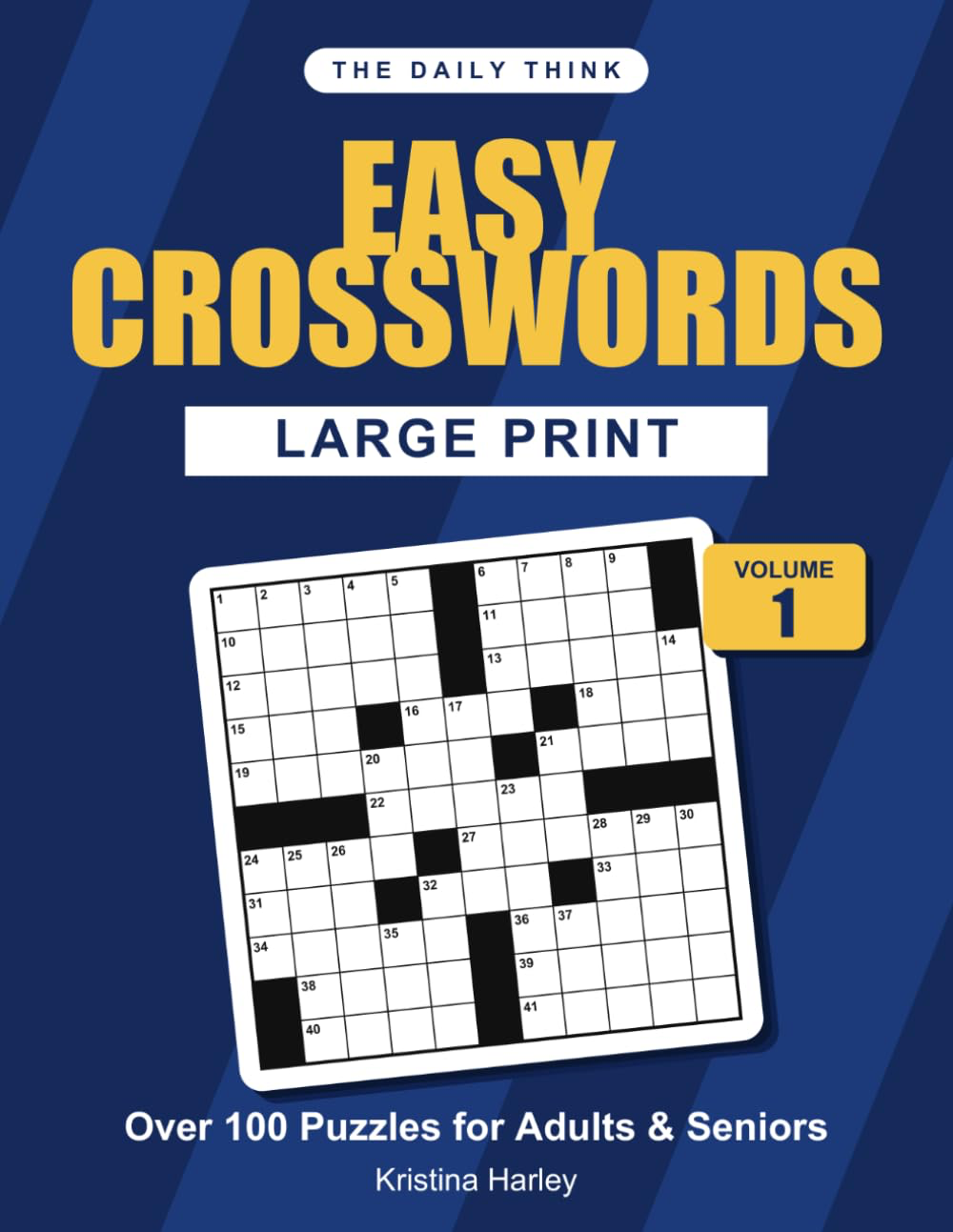
That gave me a clear starting point for The Daily Think. I wanted to bring all three into one book: an approachable puzzle, text that was easier to read, and a grid with room for the answers. Each part mattered, so I treated them as separate things to get right.
Easy Clues Were Part of the Plan
The difficulty of a crossword shapes the whole experience. A puzzle can look welcoming on the page and still leave you stuck almost immediately. For this book, I wanted the puzzles to feel approachable.
“Easy” will mean something a little different to each person. We all know different words, and a clue that clicks for one person might leave someone else thinking for a while. My aim was to make it inviting to sit down and have a go, with room to think through an answer and use the crossing letters for help.
You can start with whichever clues make sense to you. A few answers give the rest of the grid some shape, and you can come back to the gaps when you’re ready.
Large Print and Room to Write
Large print was another important part of what my mother-in-law was looking for. The size of the text affects how you read the clues and find your place as you move between the clue list and the grid.
Writing space needed its own attention. The letters have to go somewhere, and large cells give you more room to put an answer on the page. It’s a practical detail that matters throughout a pen-and-paper puzzle.
That combination guided the design: consider the words you’re reading, the puzzle you’re solving, and the spaces you’re filling in. I wanted the format to support the simple activity of sitting down with a crossword.
A Break from Social Media
Although my mother-in-law inspired the book, I also see these puzzles as an invitation to take a break from social media. Put the phone aside, pick up a pencil, and give yourself a few clues to think about.
There’s something very straightforward about the task in front of you. Read a clue, consider a word, check the letters that cross it. You choose how long to spend on it. That might mean a handful of answers during a short pause or a whole puzzle when you have more time.
If you’d like to try it, leave a puzzle book somewhere you normally reach for your phone. The next time you have a spare moment, try a few clues first. You can stop whenever you want and return to the same page later.
For Adults Beyond the “Seniors” Label
The book’s title includes “for seniors” because of the person and the practical needs that inspired it. Adults of any age can appreciate easy clues, large print, and generous writing spaces.
You might be getting back into crosswords, choosing an approachable place to begin, or simply looking for a screen-free activity. There’s no age requirement for enjoying a word puzzle or giving your brain something to work on.
The Daily Think, Volume 1 contains 90 crosswords and 11 word-search breaks, offering a change of pace between puzzles. You can also explore my puzzle books on the Lakeside Boutique books page.
This book began with my mother-in-law’s search for a particular mix of features. I hope it gives other adults a welcoming place to start, too. Choose a clue, write in an answer, and take it at your own pace.